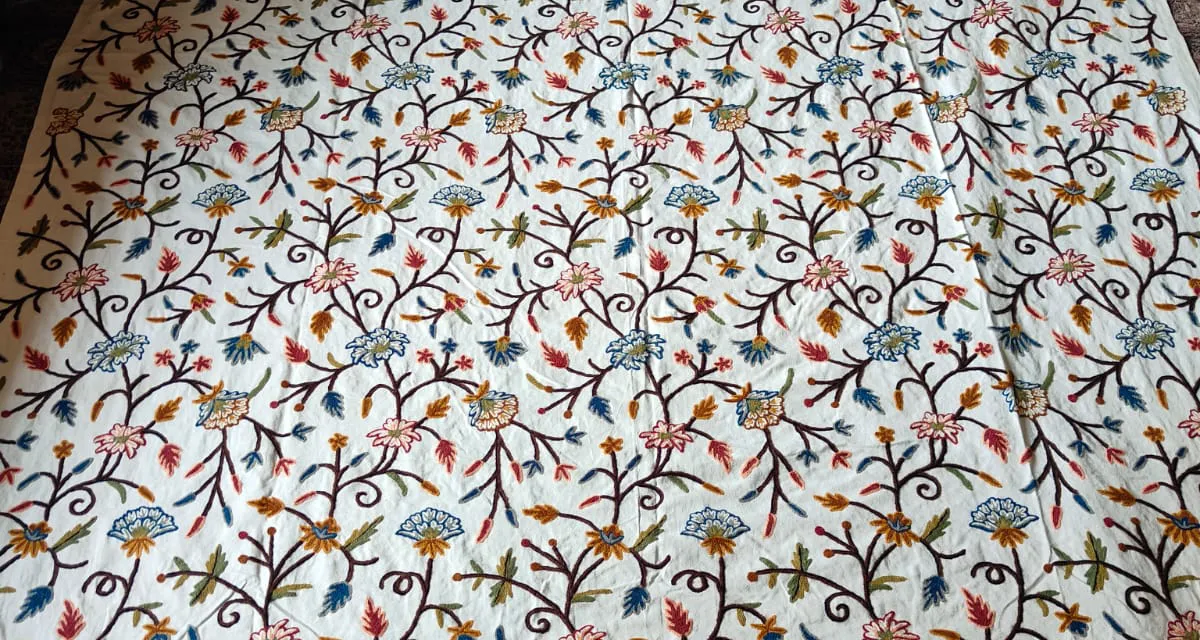
Few textile traditions combine artistry, heritage, and craftsmanship as beautifully as Indian crewel embroidery. Known for its intricate floral motifs, raised woollen stitches, and remarkable durability, crewel embroidery has decorated homes, clothing, and luxury interiors for centuries.
Today, authentic hand embroidered crewel fabric from Kashmir in India continues to be admired worldwide for its elegance and timeless appeal. Whether you’re looking for upholstery fabric, curtains, cushion covers, bags, jackets, or designer garments, genuine Kashmiri crewel embroidery adds unmatched character to every creation.
Explore authentic Kashmiri Crewel Embroidered Fabrics:
https://www.gyawun.com/t/crewel/
What is Crewel Embroidered Fabric?
Crewel embroidered fabric is a decorative textile featuring hand embroidery created using woollen yarn on a sturdy base fabric. Unlike regular embroidery that often uses silk or cotton threads, crewel embroidery uses thicker wool yarn to produce a textured, raised appearance.
The word “crewel” originally referred to a fine two-ply wool yarn traditionally used in embroidery. Over time, the embroidery style itself became known as crewel embroidery.
While crewel embroidery has historical roots in Europe, Kashmir has developed its own distinctive interpretation over generations. Today, Kashmiri crewel embroidery is recognised worldwide for its detailed craftsmanship and unique artistic style.
Browse Gyawun’s collection of authentic handmade crewel fabrics:
https://www.gyawun.com/t/crewel/
The History of Crewel Embroidery
Crewel embroidery has existed for centuries across different cultures. European crewel work flourished during the Jacobean period, where elaborate floral vines, birds, leaves, and mythical motifs decorated curtains, bedspreads, wall hangings, and furniture.
In Kashmir, artisans adopted the concept while evolving it into a unique regional craft. Instead of simply replicating European designs, Kashmiri craftsmen blended Persian influences, Mughal art, local flora, and traditional Kashmiri aesthetics.
The result is an embroidery style that is unmistakably Kashmiri.
Generations of artisans have preserved this craft, passing techniques from one family to another while continuing to produce exquisite handmade textiles admired around the world.
What Makes Kashmiri Crewel Embroidery Unique?
Several characteristics distinguish Kashmiri crewel work from other embroidery traditions.
1. Entirely Handmade
Authentic crewel embroidery is created completely by hand without computerized machines.
Every stitch reflects the artisan’s experience, precision, and creativity.
2. Rich Woollen Yarn
High-quality wool yarn creates:
- Raised texture
- Excellent durability
- Elegant depth
- Rich visual appeal
3. Nature-Inspired Motifs
Popular motifs include:
- Chinar leaves
- Paisleys
- Lotus flowers
- Tulips
- Roses
- Tree of Life
- Vines
- Floral scrolls
- Birds
- Traditional Kashmiri gardens
These timeless patterns never go out of fashion.
How Kashmiri Crewel Fabric is Made
Producing hand embroidered crewel fabric involves multiple skilled stages.
Step 1 – Designing
Artists first draw the design on paper before transferring it onto the base fabric.
Traditional patterns often take inspiration from Kashmir’s gardens, forests, architecture, and Mughal heritage.
Step 2 – Fabric Preparation
The base fabric is stretched tightly on a wooden frame to maintain even tension throughout embroidery.
Depending on the product, artisans may use:
- Cotton
- Cotton duck
- Linen
- Canvas
- Blended upholstery fabrics
Step 3 – Hand Embroidery
Using specialised embroidery hooks and needles, artisans carefully fill every motif using woollen yarn.
Depending on complexity, a single panel may require several days or even weeks to complete.
Step 4 – Finishing
After embroidery, the fabric undergoes careful inspection, cleaning, trimming, and finishing before reaching customers.
Traditional Motifs in Kashmiri Crewel Embroidery
Each motif carries artistic significance.
Chinar Leaf
Perhaps the most iconic symbol of Kashmir.
Represents heritage, strength, and changing seasons.
Paisley
Inspired by mango shapes and Persian art.
Represents abundance and prosperity.
Tree of Life
A symbol of continuity, growth, and harmony.
Floral Vines
Represent Kashmir’s beautiful gardens and Mughal influence.
Birds
Often symbolise freedom, happiness, and nature.
These timeless motifs ensure every piece remains elegant for decades.
Crewel vs Aari Embroidery
Many buyers confuse crewel embroidery with Aari embroidery.
Although both involve hand craftsmanship, they differ significantly.
| Feature | Crewel Embroidery | Aari Embroidery |
|---|---|---|
| Thread | Wool yarn | Cotton, silk, metallic threads |
| Texture | Thick and raised | Fine and delicate |
| Usage | Upholstery, curtains, décor | Fashion garments |
| Appearance | Rich textured surface | Smooth embroidery |
| Durability | Extremely durable | Lightweight elegance |
Both are beautiful art forms but serve different purposes.
Handmade vs Machine Embroidery
Machine-made embroidery has become increasingly common.
However, authentic hand embroidered crewel offers advantages that machines simply cannot replicate.
Handmade Crewel
- Every piece is unique
- Rich texture
- Better stitch variation
- Higher artistic value
- Supports artisan families
Machine Embroidery
- Uniform patterns
- Faster production
- Lower craftsmanship
- Less texture
- Limited individuality
When purchasing authentic Kashmiri crewel, always choose handmade embroidery whenever possible.
Popular Uses of Crewel Fabric
Crewel embroidery is remarkably versatile.
Popular applications include:
Home Décor
- Curtains
- Cushion covers
- Sofa upholstery
- Wall panels
- Bed runners
- Headboards
Fashion
- Jackets
- Long coats
- Handbags
- Clutches
- Waistcoats
- Designer garments
Accessories
- Table runners
- Decorative panels
- Tote bags
- Home accessories
Its durability makes it particularly suitable for furnishings that are used regularly.
Why Interior Designers Love Crewel Fabric
Luxury interior designers frequently choose crewel embroidered fabric because it instantly elevates interiors.
Its textured embroidery creates visual depth while handcrafted detailing brings warmth that machine-produced fabrics often lack.
Whether decorating a heritage home or a contemporary apartment, crewel fabric adds timeless sophistication.
How to Identify Genuine Kashmiri Crewel Fabric
Authentic handmade crewel embroidery has several distinguishing characteristics.
Look for:
- Slight stitch variations
- Raised woollen texture
- Dense embroidery
- Clean backside finishing
- Natural artistic imperfections
- Rich detailing
Perfectly identical stitches across the entire fabric often indicate machine embroidery.
Caring for Crewel Embroidered Fabric
Proper care ensures your crewel embroidery remains beautiful for years.
- Vacuum gently using a soft brush attachment.
- Avoid prolonged direct sunlight.
- Dry clean when necessary.
- Store in a dry, well-ventilated area.
- Avoid harsh detergents.
- Never scrub embroidered areas aggressively.
With proper maintenance, authentic crewel embroidery can last for decades.
Frequently Asked Questions
Is crewel embroidery handmade?
Yes. Authentic Kashmiri crewel embroidery is created entirely by hand by experienced artisans.
What thread is used in crewel embroidery?
Traditionally, woollen yarn is used to create the signature raised texture.
Is crewel fabric suitable for upholstery?
Yes. Its durability makes it ideal for sofas, chairs, cushions, headboards, and curtains.
Can crewel fabric be used for clothing?
Absolutely. Designers use crewel embroidery for jackets, coats, bags, and contemporary fashion.
Is every piece identical?
No. Since every item is handmade, slight variations make each piece unique.